
Boccaccio politico per la città di Firenze
to 06 January 26
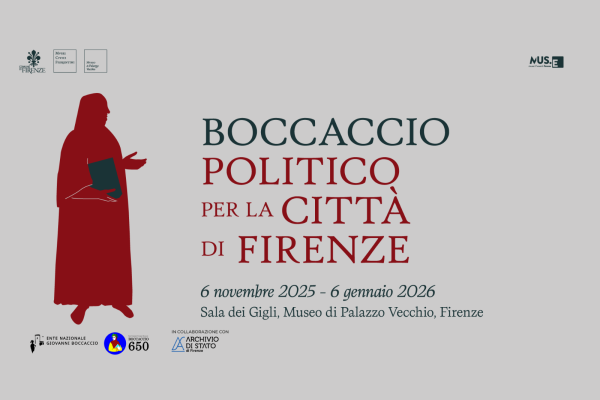
From 6 November 2025 to 6 January 2026, the museum will host Boccaccio politico per la città di Firenze, an unprecedented exhibition revealing the great author of the Decameron in his civic and public dimension. Organised by Fondazione MUS.E and promoted by the Comune of Florence to mark the 650th anniversary of his death (1375–2025), the exhibition is supported by the Giovanni Boccaccio National Institute and the State Archives. Curated by Lorenzo Tanzini, under the scientific coordination of Carlo Francini and Valentina Zucchi, the exhibition invites visitors to rediscover Boccaccio as an active figure in the political and administrative life of 14th century Florence, as well as a writer and humanist.
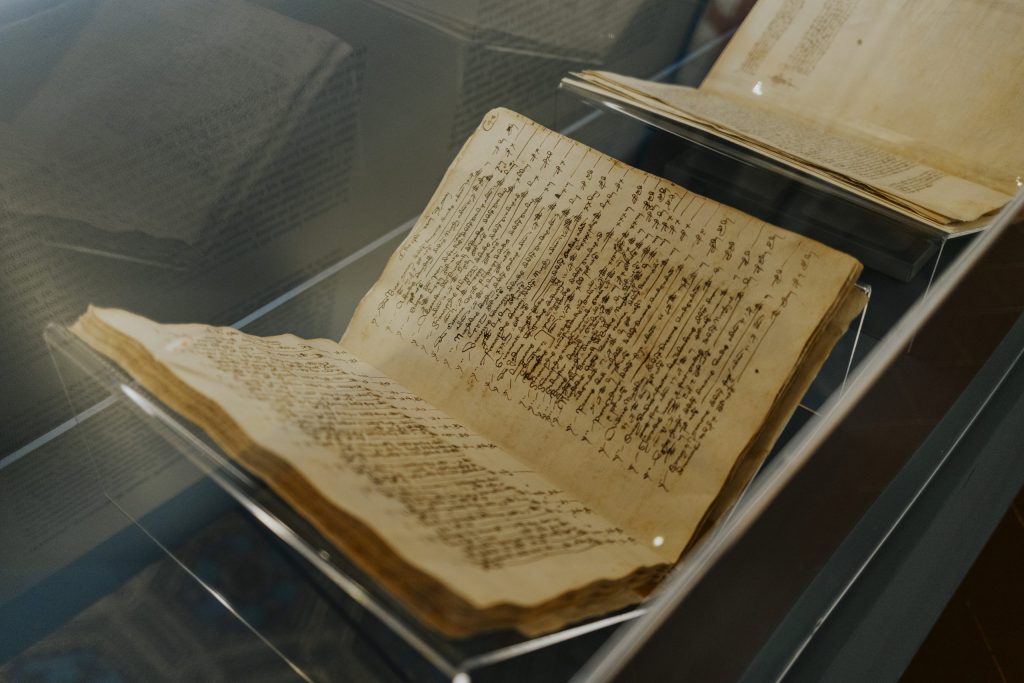
Through documents, manuscripts and visual testimonies, the exhibition reveals the political persona of the author from Certaldo, recounting the most significant moments of his public career, including his diplomatic assignments, official missions and administrative roles within the Florentine Republic.
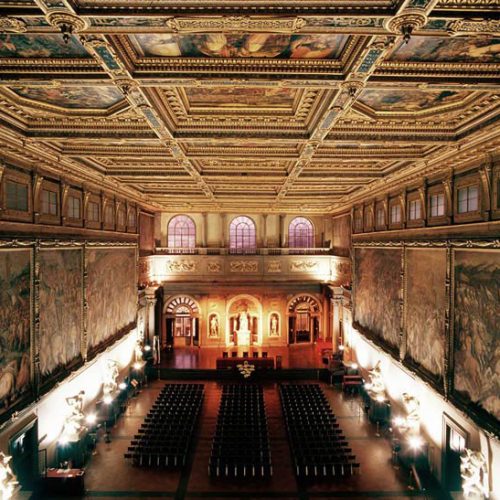
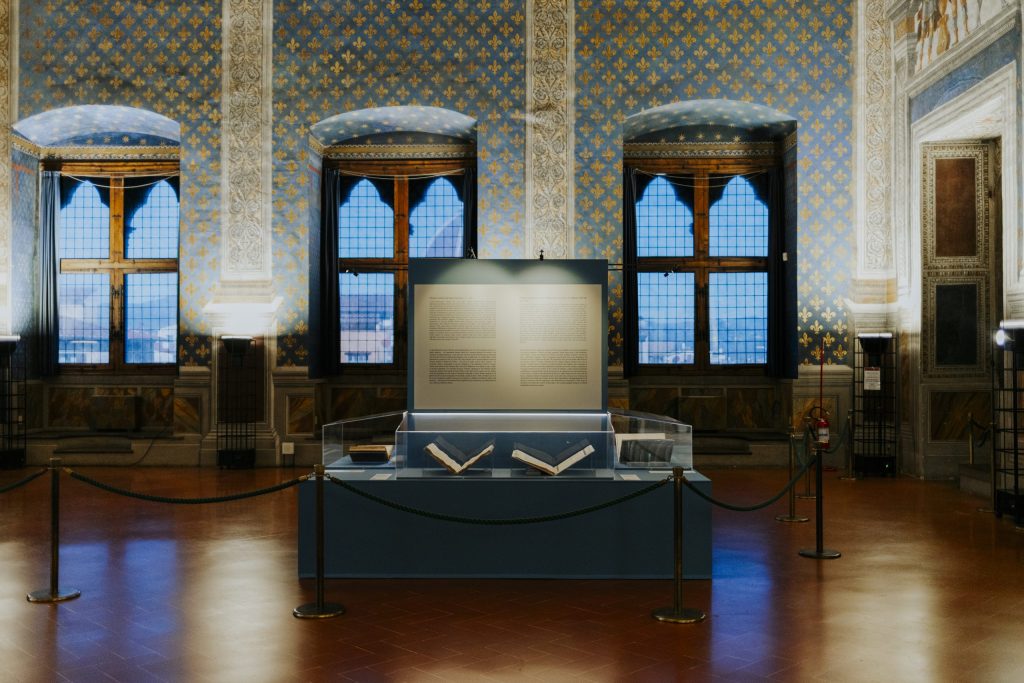
Held in the city’s civic palace, the exhibition enables visitors to trace the pivotal moments of Boccaccio’s involvement in the governance of Florence, providing a tangible insight into the pivotal role of literary education in shaping civic values during the Middle Ages.
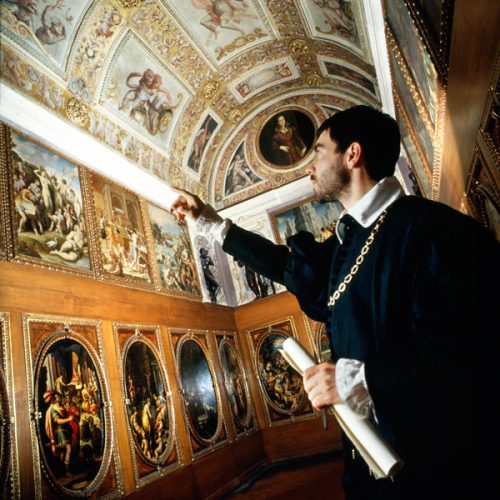
The project is particularly significant in its setting: the Sala dei Gigli, which was once home to a celebrated series of portraits of illustrious men. At the end of the 14th century, Chancellor Coluccio Salutati commissioned a series of paintings designed to inspire the city’s governors. Alongside heroes, rulers, and generals, it featured the great Tuscan poets Dante, Petrarch, and Boccaccio.
In this sense, the exhibition continues the theme begun in 2021 with the project dedicated to Dante Alighieri on the 700th anniversary of his death — an event which celebrated the concept of the common good and the contribution of the arts, literature, and culture to civic life.
With loans from the State Archives, the National Central Library, the Biblioteca Medicea Laurenziana in Florence and the Capitular Library of Verona, the exhibition devotes considerable space to the political culture of Boccaccio’s era, when civic engagement was considered an integral aspect of citizenship. In the Middle Ages, participating in public life was a shared responsibility and a distinctive feature of belonging to the community.
Following in his father’s footsteps — who had obtained Florentine citizenship, along with the right to hold public office — Boccaccio played an active role in city politics. He contributed to economic and military management, and thanks to his learning and experience, undertook major diplomatic missions to princes, rulers and popes, including Innocent VI and Urban V.
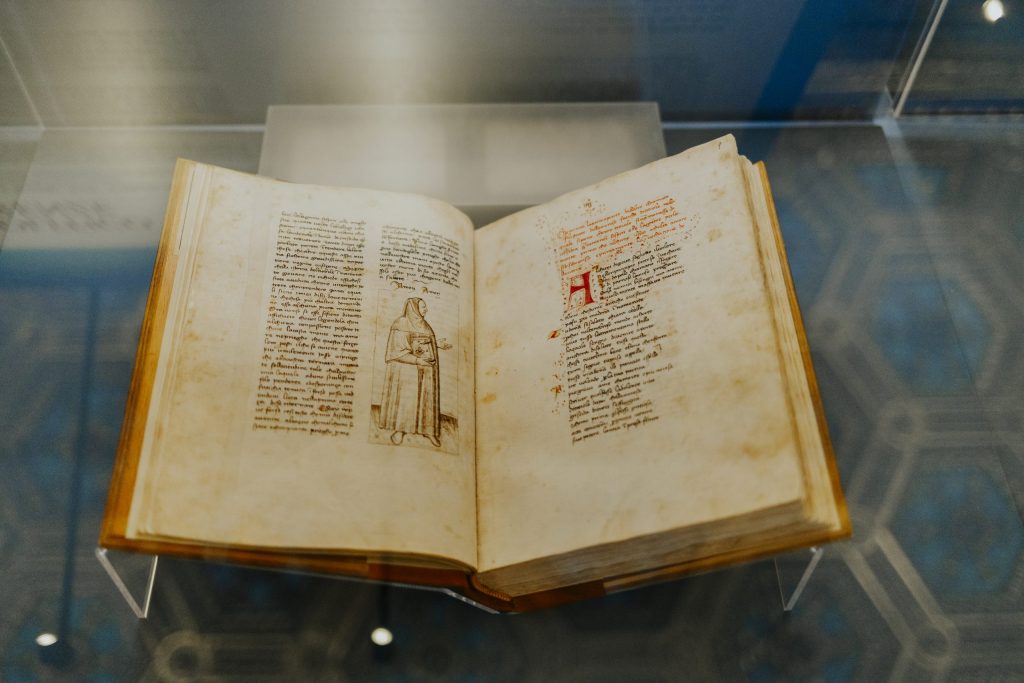
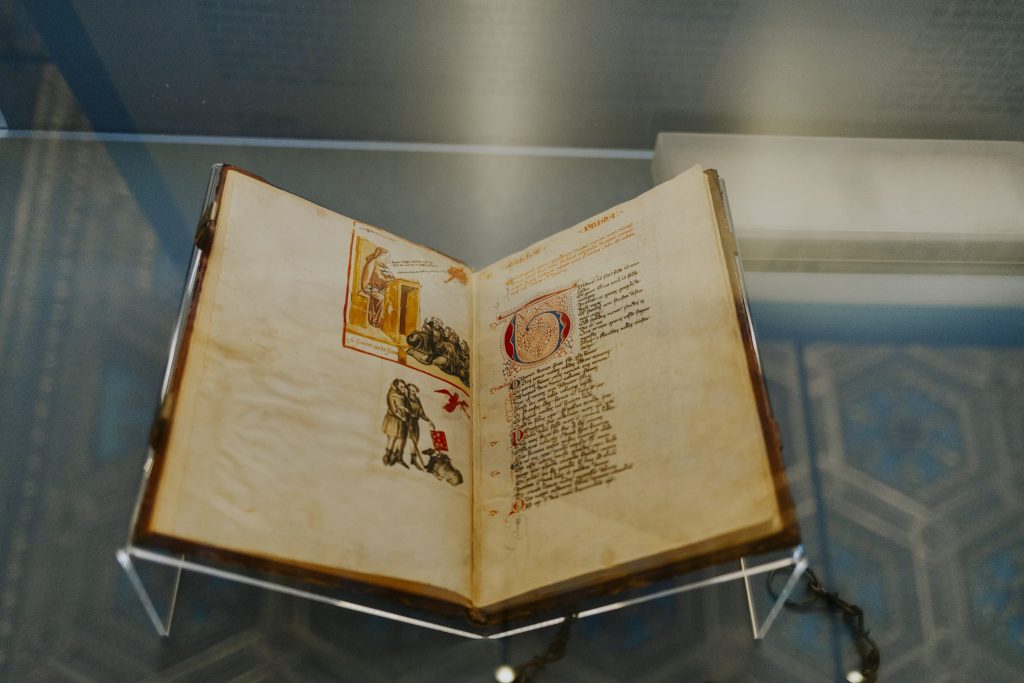
Among the documents on display are several that are of great importance for understanding Boccaccio’s civic career and posthumous image. These include his tax record as a citizen of the parish of Santa Felicita, the document recording Prato’s submission to Florence in which Boccaccio appears as a witness, and the commission for his diplomatic mission to the German dukes.
Rare illuminated manuscripts depict the poet teaching a group of friars or conversing with the emperor, which are symbolic images of his intellectual and civic authority. These culminate in the solemn representation of the author in the Filostrato manuscript of the National Central Library (Ms II.II.38, fol. 3v), which is displayed alongside Filippo Villani’s account of Florence’s illustrious men, including Boccaccio himself.
A special section of the project is hosted at the State Archives (open to the public free of charge, Monday–Friday, 8:30–17:00, from Monday, 10 November). Here, visitors can admire two precious and fragile artefacts:
The leather ‘bags’ used in the Republic’s ‘tratta’ system to draw names for public offices, and the government decree commissioning the construction of tombs in the cathedral for the city’s great intellectuals — the jurist Accursius, Dante, Petrarch, the poet Zanobi da Strada and Giovanni Boccaccio — ‘in perpetual memory and illustrious fame‘ of them all, and of the city and republic of Florence.
Boccaccio’s first significant civic role came in 1351 within the Camera del Comune (the city’s treasury). Though largely technical in nature, this office carried deep political and symbolic meaning: it was, in essence, the very heart of Florence’s public authority. It safeguarded financial resources and the Republic’s official records — the foundation of its continuity and legitimacy. All public expenditure, including delicate matters such as war and diplomacy, passed through the Camera’s oversight.
The year 1351 proved to be the most fruitful period of his public service. His reputation as a cultured man earned him various ambassadorial missions, particularly to the lords of Romagna, Milan and several German princes, including Louis, Duke of Bavaria. The most meaningful of these missions retraced the paths of his literary forebears. Representing the Compagnia di Orsanmichele, Boccaccio travelled to Ravenna to pay homage to Beatrice, Dante’s daughter, and to Padua, where he met Petrarch in person to deliver the invitation, on behalf of the Florentine Signoria, for him to return to Florence as a university lecturer (an invitation which was never accepted). His subsequent appointment to the bread tax office (gabella del pane) in 1352 was also pivotal: ensuring the food supply for a city of over one hundred thousand people required constant vigilance, as shortages could swiftly jeopardise social order. The most intense period of Boccaccio’s civic engagement — the central decades of the 14th century — also marked Florence’s conscious investment in the language of culture. A pivotal moment came in 1355, when the city’s statutes were translated into the vernacular, making the foundations of civic law accessible to all citizens. The Decameron and the Statutes, produced in this cultural climate, both reveal a shared aspiration: to shape Florence’s civic identity through the power of words, whether literary or legal.
In his later years, Boccaccio’s engagement with civic and cultural life reached a symbolic culmination. Encouraged by his devotion to Dante and his writing of the Trattatello in laude di Dante, he was entrusted with public readings and commentaries on the Divine Comedy between 1373 and 1374 — a pivotal moment in the definition of Florence’s cultural identity. His civic roles can thus be seen as the opening chapter in the long tradition of humanist chancellors that would later come to define Florentine political culture, from Salutati — the visionary behind the ‘Illustrious Men’ cycle in the Palazzo Vecchio — to Leonardo Bruni and, later, Niccolò Machiavelli.
In keeping with this idea that culture can inspire good governance and civic virtue, the exhibition offers visitors a fresh perspective on the enduring legacy of Giovanni Boccaccio.
Talks and events
To explore the exhibition’s themes, a series of public lectures will be held at 11:00 in the Museo di Palazzo Vecchio.
9 November: ‘The Florentine institutions at the time of Boccaccio’s missions’, with Lorenzo Tanzini, curator and professor at the University of Cagliari.
16 November – Between Hounds and Hounds: Dante, Boccaccio and the Idea of China’, with Francesco Vossilla, Professor at Gonzaga University in Florence.
30 November: ‘Boccaccio, Civic Official of Florence’, with Elena Filosa, Professor at Vanderbilt University (Tennessee).
14 December – ‘Through the Streets and Squares of Florence: Boccaccio and the City’, with Giovanna Frosini, Professor at the University for Foreigners of Siena and President of the Ente Nazionale Giovanni Boccaccio.
Participation is free, but exhibition entry requires a ticket and booking.
info@musefirenze.it or by phone on 055 0541450
City Walks
Special walking tours exploring the sites connected to Boccaccio’s life and political activity will take place on Sunday 7 December 2025 and Sunday 4 January 2026.
Organised by the UNESCO Office of the Comune of Florence (World Heritage and Relations Department), the tours start at Palazzo Vecchio and wind through the historic centre, revealing the civic and religious landmarks of mid-14th-century Florence.
Participation is free, with reservations opening on the preceding Monday.
info@musefirenze.it or by phone on 055 0541450.
Credits
Promoted by the Comune of Florence
Organised by Fondazione MUS.E
With the patronage of the Ente Nazionale Giovanni Boccaccio
and the State Archives
Curated by Lorenzo Tanzini
Scientific coordination by Carlo Francini and Valentina Zucchi
Discover the museum
Museo di Palazzo Vecchio
Related activities